Featured Post

Welcome!

Welcome to Canadian Civics 101! This blog started as a way for me to continue teaching Canadian Civics to grade 4-8 students during the Covi...

Showing posts with label Indigenous Affairs. Show all posts

Thursday, December 2, 2021

Residential Schools Apology

*Note: I appreciate this is an incredibly sensitive subject that is still ongoing. Reconciliation will not be achieved until the voices of all those affected have been heard and acknowledged, the ongoing wrongs against Indigenous peoples have been righted and every single call to action has been achieved. These notes refer specifically to the official apology for the residential school system as stated by then Prime Minister, the Right Honourable Stephen Harper, in 2008*

  • As the government continued to transfer control of local affairs to individual First Nations, education also began to be “given back” to the Indigenous people.
  • New education policies began to emerge in the 1970s, with First Nations developing education systems that incorporated both the fundamental elements of a modern curriculum, as well as aspects of their respective traditions, languages and cultures.
  • Special grants for training First Nations teachers, traditional language classes and lessons in First Nations history and culture helped strengthen these new education systems.
    • With these advances, the residential school system increasingly fell out of favour and was slowly phased out.
  • The final residential school, located in Saskatchewan, was closed in 1996.
  • While First Nations took charge of educating their children, the legacy of the residential school system became increasingly apparent.
  • More and more stories surfaced regarding abuse and mistreatment of children by school administrators and teachers.
  • In 1990, the Assembly of Manitoba Chiefs leader Phil Fontaine called on the government and the churches involved with residential schools to acknowledge and address the decades of abuse and mistreatment that occurred at these institutions.
  • In its final report, the Royal Commission on Aboriginal Peoples noted the deep and lasting negative impacts this policy had on those who attended the residential schools, as well as their families, communities and cultures.
  • As claims and litigation against the government and churches continued to mount, the first steps toward reconciliation began in the 1990s.
  • The various churches involved in running these institutions were began to offer their apologies to residential school survivors (note: the Canadian Conference of Catholic Bishops only officially apologized for their role in the country's notorious residential school system in 2021, and to date the Vatican has yet to apologize)
  • In 1998, the government also acknowledged its role in the abuse and mistreatment of Aboriginal students during their time at residential schools.
  • Finally, in 2007 the Government announced a compensation package called the Common Experience Package for residential school survivors, worth nearly $2 billion.
    • The settlement included a “common experience” payment, as well as an independent assessment process, commemoration activities, and measures to support healing.
  • The Indian Residential Schools Truth and Reconciliation Commission was created to act as an independent association and to provide a safe and culturally appropriate place for former students and others affected by the residential school system to share their experiences.
  • The Government of Canada (via Prime Minister Stephen Harper) offered a historic formal apology on June 11, 2008 to all former students of residential schools, and asked their forgiveness for the suffering they experienced and for the impact the schools had on Indigenous cultures, heritage and languages.
    • The apology also made clear the government's commitment to address the legacy of residential schools through continuing measures, including the work of the Truth and Reconciliation Commission.


The Residential Schools Apology from Hansard

I stand before you today to offer an apology to former students of Indian residential schools. The treatment of children in these schools is a sad chapter in our history. For more than a century, Indian residential schools separated over 150,000 aboriginal children from their families and communities.

In the 1870s, the federal government, partly in order to meet its obligations to educate aboriginal children, began to play a role in the development and administration of these schools.

Two primary objectives of the residential school system were to remove and isolate children from the influence of their homes, families, traditions and cultures, and to assimilate them into the dominant culture. These objectives were based on the assumption that aboriginal cultures and spiritual beliefs were inferior and unequal. Indeed, some sought, as was infamously said, “to kill the Indian in the child.”

Today, we recognize that this policy of assimilation was wrong, has caused great harm, and has no place in our country. One hundred and thirty-two federally-supported schools were located in every province and territory, except Newfoundland, New Brunswick and Prince Edward Island. Most schools were operated as joint ventures with Anglican, Catholic, Presbyterian and United churches. The Government of Canada built an educational system in which very young children were often forcibly removed from their homes and often taken far from their communities. Many were inadequately fed, clothed and housed. All were deprived of the care and nurturing of their parents, grandparents and communities. First Nations, Inuit and Métis languages and cultural practices were prohibited in these schools. Tragically, some of these children died while attending residential schools, and others never returned home.

The government now recognizes that the consequences of the Indian residential schools policy were profoundly negative and that this policy has had a lasting and damaging impact on aboriginal culture, heritage and language. While some former students have spoken positively about their experiences at residential schools, these stories are far overshadowed by tragic accounts of the emotional, physical and sexual abuse and neglect of helpless children, and their separation from powerless families and communities. The legacy of Indian residential schools has contributed to social problems that continue to exist in many communities today.

It has taken extraordinary courage for the thousands of survivors who have come forward to speak publicly about the abuse they suffered. It is a testament to their resilience as individuals and to the strengths of their cultures. Regrettably, many former students are not with us today and died never having received a full apology from the Government of Canada.

The government recognizes that the absence of an apology has been an impediment to healing and reconciliation. Therefore, on behalf of the Government of Canada and all Canadians, I stand before you, in this chamber so central to our life as a country, to apologize to Aboriginal peoples for Canada’s role in the Indian residential schools system.

To the approximately 80,000 living former students and all family members and communities, the Government of Canada now recognizes that it was wrong to forcibly remove children from their homes, and we apologize for having done this. We now recognize that it was wrong to separate children from rich and vibrant cultures and traditions, that it created a void in many lives and communities, and we apologize for having done this. We now recognize that in separating children from their families, we undermined the ability of many to adequately parent their own children and sowed the seeds for generations to follow, and we apologize for having done this. We now recognize that far too often these institutions gave rise to abuse or neglect and were inadequately controlled, and we apologize for failing to protect you. Not only did you suffer these abuses as children, but as you became parents, you were powerless to protect your own children from suffering the same experience, and for this we are sorry.

The burden of this experience has been on your shoulders for far too long. The burden is properly ours as a government, and as a country. There is no place in Canada for the attitudes that inspired the Indian residential schools system to ever again prevail.

You have been working on recovering from this experience for a long time, and in a very real sense we are now joining you on this journey. The Government of Canada sincerely apologizes and asks the forgiveness of the aboriginal peoples of this country for failing them so profoundly.

We are sorry.

In moving toward healing, reconciliation and resolution of the sad legacy of Indian residential schools, the implementation of the Indian residential schools settlement agreement began on September 2007. Years of work by survivors, communities and aboriginal organizations culminated in an agreement that gives us a new beginning and an opportunity to move forward together in partnership.

A cornerstone of the settlement agreement is the Indian residential schools truth and reconciliation commission. This commission represents a unique opportunity to educate all Canadians on the Indian residential schools system. It will be a positive step in forging a new relationship between Aboriginal peoples and other Canadians, a relationship based on the knowledge of our shared history, a respect for each other and a desire to move forward with a renewed understanding that strong families, strong communities and vibrant cultures and traditions will contribute to a stronger Canada for all of us.

God bless all of you. God bless our land.

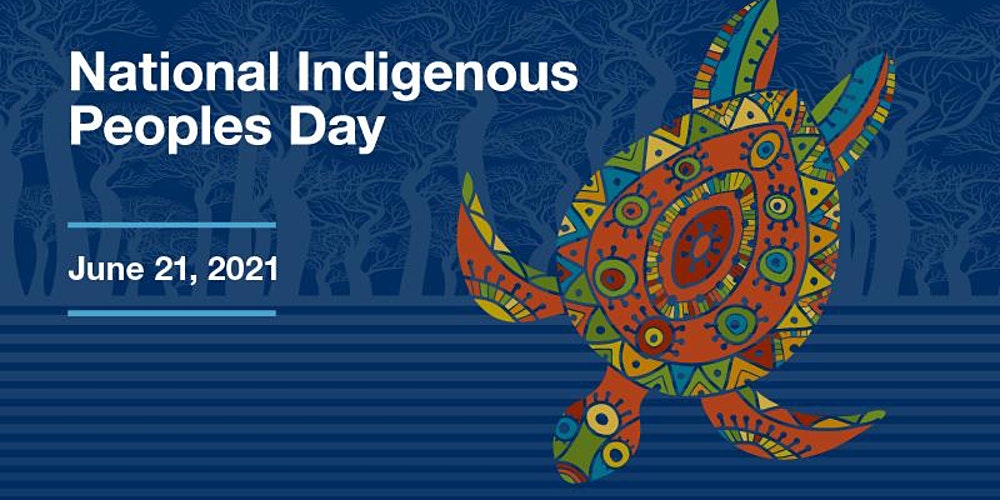
National Indigenous Peoples Day

  • Shortly after the adoption of the Canadian Charter of Rights and Freedoms in 1982, the National Indian Brotherhood, the leading body representing First Nations in Canada, called for the creation of a yearly "National Indigenous Solidarity Day" on June 21st.
  • Pressure for a national day of recognition continued to grow during the following decade as new ways were sought to bridge the divide between Indigenous peoples and Canadians, especially in the wake of the Oka Crisis.
  • In 1995, the Royal Commission on Aboriginal Peoples recommended the designation of a "National First Peoples Day" as a way to focus attention on the history, achievements and contributions of Indigenous peoples in Canada.
    • This message was repeated later that year during the Sacred Assembly, a national conference chaired by Elijah Harper, which called for a national holiday to celebrate the contributions of Indigenous peoples.
  • On June 13, 1996, after considerable consultation with Indigenous organizations, June 21st was officially declared National Aboriginal Day.
  • Since its inauguration, National Aboriginal Day (now National Indigenous Peoples Day) has become part of the annual nationwide Celebrate Canada! festivities held from June 21st to July 1st.
    • June 21st was chosen because of the cultural significance of the summer solstice and because many Indigenous groups mark this day as a time to celebrate their heritage.
  • Setting aside a day for Indigenous peoples is part of the wider recognition of their important place within the fabric of Canada and the ongoing contributions to Canadian society made by First Nations, Métis and Inuit.


Self-Government

  • In response to First Nations' demands for greater autonomy, the House of Commons established a parliamentary committee in 1983 known as the Penner Committee to investigate Indigenous self-government.
  • The committee stated in its report that this right was part of the lives of all First Nations and should be entrenched in the Constitution alongside Indigenous and treaty rights.
  • In 1995, the government launched the Inherent Right Policy to negotiate arrangements with Indigenous groups to make self-government a reality.
  • This process involved extensive consultations with Indigenous leaders at the federal, provincial and municipal levels and took the position that the right of Indigenous self-government already existed within the Constitution.
  • New self-government agreements would then be partnerships between Indigenous peoples and the federal government.
  • The policy also recognized that no single form of government was applicable to all Indigenous communities.
  • Self-government arrangements would therefore take many forms based upon the particular historical, cultural, political and economic circumstances of each Indigenous group.
  • Since the introduction of the policy, there have been 17 self-government agreements completed, many of which are part of larger Comprehensive Claims agreements.


The Oka Crisis and RCAP

  • The extent of the conflict between the First Nations and the Canadian government became more urgent following the events at Oka, Quebec in 1990.
  • On July 11th, the Quebec Provincial Police tried to dismantle a roadblock that had been set up outside Montreal in mid-March by a group of Mohawks from Kanesatake.
    • This First Nation community had erected the roadblock to prevent the nearby town of Oka from expanding a golf course onto sacred Mohawk lands.
  • For 78 days, armed Mohawk warriors faced off against the Quebec Provincial Police, and later the Canadian Armed Forces, before withdrawing from their barricade after an agreement was reached between all parties. However, one police officer was killed during the raid.
  • Supporters of the Mohawk Warriors Society argued that the Oka Crisis raised the awareness of Indigenous issues in a way that Indigenous leaders had been unable to do previously.
    • However, others argued that any gains made were offset by increased racism toward Indigenous peoples as well as a loss of credibility for the Indigenous rights movement and rising militancy among discontented Indigenous youth.
  • A few months later, in 1991, the government established the Royal Commission on Indigenous Peoples (RCAP).
    • The RCAP report is a significant body of work that has been widely used to inform public debate and policy making.
  • The Commission's goal was to propose specific solutions to issues that had long affected the relationship between Indigenous peoples, the government and Canadian society as a whole.
  • The Commission published its final report in 1996, which included 440 recommendations covering a wide range of Indigenous issues.


Bill C-31

  • Since the mid-1800s, government policy had dictated that First Nations women automatically lost their Indian "status" if they married non-Indigenous men.
    • Many First Nations members, especially women, criticized this section of the Indian Act as blatant discrimination.
  • By the 1980s, criticism of this aspect of the Act was widespread throughout Canadian society.
  • After a series of 1970s court challenges attacking this loss of status for First Nations women, the government consulted with First Nations leaders on how best to amend the Act.
  • Parliament passed Bill C-31 in 1985. This was an amendment to the Indian Act that:
    • Removed discriminatory practices
    • Eliminated the links between marriage and status
    • Gave individual bands greater control in determining their own membership
    • Defined two new categories of Indian status
    • Distinguished between band membership and Indian status
  • While the government would continue to determine status, bands were given complete control over membership lists.
  • Through this amendment, over 60,000 Indigenous people regained their lost status.


Wednesday, December 1, 2021

“Existing Indigenous and Treaty Rights"

  • The federal government entered into constitutional discussions with provincial premiers between 1977 and 1981 to reform and repatriate the Constitution.
  • Indigenous political organizations tried unsuccessfully to get a seat at the negotiations table, and when a 1981 constitutional proposal was announced, Indigenous and treaty rights were excluded.
  • However, after several months of concerted lobbying, First Nations, Inuit and Métis organizations succeeded in having two clauses included in Section 35 of the Constitution, to recognize "existing Indigenous and treaty rights”
  • However, those rights remained undefined because of disagreements between the provinces, Canada and Indigenous groups.
  • Responsibility has fallen to the courts to define the extent and scope of these rights and to direct government policies and programs so that they respect these rights and prevent any infringement of them.


The White Paper

  • In 1969, the government began to examine a new approach to its Indian policy based on the view that all Canadians held the same rights regardless of ethnicity, language or history.
  • The government believed that the "special status" of First Nations and Inuit had disadvantaged them and prevented them from integrating into Canadian society. As a result, the government created a policy known as the White Paper. 
  • This paper called for:
    • A full repeal of the Indian Act
    • An end to federal responsibility for First Nations and termination of special status
    • The movement of responsibility for Indian affairs to provincial governments, which would then administer services for First Nations
    • An equitable way to bring an end to treaties
  • First Nations overwhelmingly rejected the White Paper, because there was no consultation with the First Nations people who would be directly affected.
  • While the Indian Act was seen as overbearing and controlling over the rights of Indigenous people, the Act still protected special Indigenous status and rights within Confederation
  • Due to the negative reactions, the government withdrew the White Paper in 1971.
  • The government's White Paper led to the creation of a new form of Indigenous nationalism.
    • First Nations leaders from across the country united in new associations and organizations determined to protect and promote their peoples' rights and interests.
      • These organizations proposed their own policy alternatives.
      • The Indian Association of Alberta, for example, argued in a paper entitled Citizens Plus that Indigenous peoples held rights and benefits that other Canadians did not.
  • First Nations leaders argued that their people were entitled to all the benefits of Canadian citizenship, in addition to special rights deriving from their unique and historical relationship with the Crown.
  • The federal government slowly began to change in response.
    • For example, they withdrew all government agents from reserves and began to fund Indigenous political organizations.

First Nations in Modern Canadian Society

  • Despite decades of difficult living conditions under the Indian Act, many, approximately 6,000 Indigenous soldiers from across Canada served in the First World War alone, and thousands more in WWII and the Korean War.
  • By the late 1940s, social and political changes began to mark a shift for First Nations in Canada.
  • Several First Nations leaders drew attention to the fact that thousands of their people had fought for their country in both World Wars.
  • First Nations across the country began to create provincial organizations to express their peoples' desire for equality along with the maintenance of their cultural heritage.


Change of Management

  • In 1946, a special parliamentary committee of the Senate and the House of Commons reviewed Canada's policies and management of Indian affairs.
  • For three years, the committee received briefs and held discussions with First Nations, missionaries, school teachers and federal government administrators, which realized the full impact of Canada's assimilation policies.
    • These hearings were one of the first opportunities First Nations leaders and Elders had to address parliamentarians directly instead of through the Department of Indian Affairs.
  • First Nations rejected the idea of assimilation into Canadian society and spoke out against the enforced enfranchisement provisions of the Indian Act.
  • Many groups asked that the "wide and discretionary" powers long held by the government be invested in First Nations chiefs and councillors on reserves.
    • This way, First Nations could determine their own criteria for band membership and manage their own funds and reserve lands.
  • The joint committee did not recommend a full dismantling of the Indian Act and its assimilationist policies
    • However, it did recommend that many of the mandatory, “British North American favouring” elements of the Act be scaled back and that a Claims Commission be established to hear problems arising from the fulfilment of treaties.
  • Amendments to the Indian Act in 1951 did not bring about sweeping changes to the government's Indian policy that were hoped for by First Nations in Canada. However, some aspects changed for the better.
    • Some elements of the Act, such as the mandatory enfranchisement policy, were repealed as were the laws that determined Indian status.
    • In addition, sections of the Act banning the potlatch and other traditional ceremonies, as well as fundraising to pursue land claims, were repealed.
  • Bands were also given more, but not complete, control over the administration of their communities and over the use of band funds and revenues.
  • National pension benefits and other health and welfare benefits were to be extended to First Nations.
  • In 1960, First Nations were at long last extended the right to vote in federal elections, another recommendation of the 1946 joint committee.
  • First Nations veterans played a big role in this important advance, pointing out that, despite having fought for Canada in two World Wars, they were still deprived the right to vote.
  • Other improvements for First Nations included the provision of better healthcare services in the mid-1950s.
    • With these improvements, the Status Indian population increased rapidly.
  •  In addition, many more First Nations children had access to schooling, including secondary and post-secondary education.
  • In general, however, the living conditions of First Nations still fell far short of the standards of other Canadians


Residential Schools

*Trigger warning: This lesson contains information about the operations of the Residential School System in Canada, which was in place from the 1880s until 1996. It is my goal to publish this to inform and educate, not to harm anyone who may be re-living the trauma of this system.

The Indian Residential Schools Crisis Line is available 24-hours a day for anyone experiencing pain or distress as a result of his or her Residential school experience. Please call 1-800-721-0066. For more information on the program, please refer to the FNHA website.*


“Two primary objectives of the residential school system were to remove and isolate children from the influence of their homes, families, traditions and cultures, and to assimilate them into the dominant culture. These objectives were based on the assumption Indigenous cultures and spiritual beliefs were inferior and unequal. Indeed, some sought, as it was infamously said, “to kill the Indian in the child.” Today, we recognize that this policy of assimilation was wrong, has caused great harm, and has no place in our country.”

– Prime Minister Stephen Harper, official apology, June 11, 2008


  • The term residential schools refers to a school system set up by the Canadian government and administered by churches designed to educate Indigenous children but also indoctrinating them into Euro-Canadian and Christian ways of living.
  • The residential school system operated from the 1880s into the closing decades of the 20th century and forcibly separated children from their families for extended periods of time, forbidding them to acknowledge their Indigenous heritage and culture or to speak their own languages.
  • Nicholas Flood Davin, under direction from Prime Minister Sir John A. Macdonald, recommended following the U.S. example of “aggressive civilization” in the school system.
  • Authorities would frequently take children to schools far from their home communities, part of a strategy to alienate them from their families and familiar surroundings.
  • In 1920, under the Indian Act, it became mandatory for every Indian child to attend a residential school and illegal for them to attend any other educational institution.
  • Because the government’s and the churches’ intent was to eradicate all aspects of Indigenous culture in these young people and interrupt its transmission from one generation to the next, the residential school system is commonly considered a form of cultural genocide.
  • This genocide was multi-faceted:
    • Students were separated from their families
    • Students had their hair cut short
    • They were dressed in uniforms
    • Their days were strictly regimented
    • Boys and girls were kept separate
    • Students were strictly forbidden to speak their languages or to practice Indigenous customs or traditions.
  • Teachings focused primarily on practical skills.
    • Girls were taught to do laundry, sew, cook, and clean.
    • Boys were taught carpentry, tinsmithing, and farming.
    • Many students only attended class part-time (most only reaching a grade 5 level by their 18th birthday) and worked for the school the rest of the time:
    • Girls did the housekeeping
    • Boys did general maintenance and agriculture.
  • Emotional and psychological abuse was constant, physical abuse was used as a punishment, and sexual abuse was also common.  
  • B.C. Supreme Court Justice Douglas Hogarth stated, “As far as the victims were concerned, the Indian residential school system was nothing more than institutionalized pedophilia.”
  • In 1907, government medical inspector P.H. Bryce reported that 24 percent of previously healthy Indigenous children across Canada were dying in residential schools, and anywhere from 47-75% of students discharged from residential schools died shortly after returning home
  • The Royal Commission of Indigenous Peoples concluded that church and state officials were fully aware of the abuses and tragedies at the schools.
  • Some former students have fond memories of their time at residential schools, and certainly some of the priests and nuns who ran the schools treated the students as best they could given the circumstances. But even these “good” experiences occurred within a system aimed at destroying Indigenous cultures and assimilating Indigenous students.